Discovery through engineering handoff, with the same team accountable through release
Designing digital products for NASA, Fiserv, Uber, NIH, and Mozilla since 2017
Fuselab Creative is a digital product design agency, which means the same team that runs the user research also designs the interface and produces the engineering handoff documentation. There are no internal handoffs between research and design, or between design and engineering. The deliverables and engineering team picks up at handoff (annotated specifications, interaction state diagrams, and a documented design system) come from the same designers who decided what to build and why.









Our Digital Product Design Company Portfolio







We start with the users, not the brief
In every engagement the Fuselab team conducts interviews with the people who will actually use the product, not the stakeholders describing them and not the product owners interpreting them. What users actually do differs from what stakeholders believe they do, and that gap is where most product failures originate. The first weeks of every Fuselab engagement are spent closing it.

Product design is a team sport
Good product design requires UX researchers, interaction designers, visual designers, and product strategists to work toward the same goal simultaneously. We do not hand work off between isolated disciplines: research informs interaction design, which informs visual design, with the same people in the room across all three. That is how products end up coherent rather than assembled.

We use Lean UX because it gets to the truth faster
Lean UX starts with outcomes, not deliverables. Before we produce a single artifact, we align with you on what a successful product actually looks like: what users will do differently, what business metrics will move, and what failure looks like. Then we work backward from those outcomes to design the product that achieves them. This means clients who have engaged us for redesigns have rarely needed a second redesign.
We run design as a series of experiments
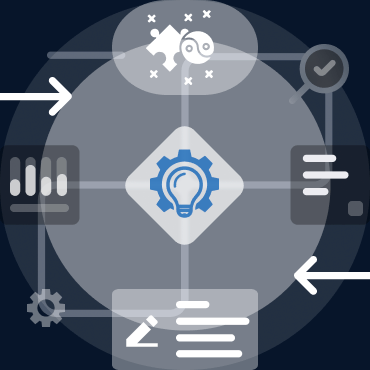
Every sprint runs against a hypothesis the team plans to test, then refines what works and discards what does not. This sounds methodical because it is. The agencies that skip this discipline are the ones whose clients eventually hire someone else to redesign what got built. We have been someone else enough times to know exactly what goes wrong and when.

Our Services and Solutions


Industries we design digital products for
Fuselab's digital product design practice serves enterprise clients across industries. Our portfolio is strongest in sectors where visual polish alone cannot solve the design problem: AI and machine learning, healthcare and clinical workflows, financial services and fintech, and government at both federal and state levels.

Federal and state digital products face constraints that commercial products do not: accessibility mandates, procurement timelines, security requirements, and user populations with a wider range of technical fluency than in the private sector. We have worked with agencies including NASA and California DHCS. We hold GSA MAS Contract 47QTCA22D00CV, which means government buyers can engage us without a separate competitive bid process.

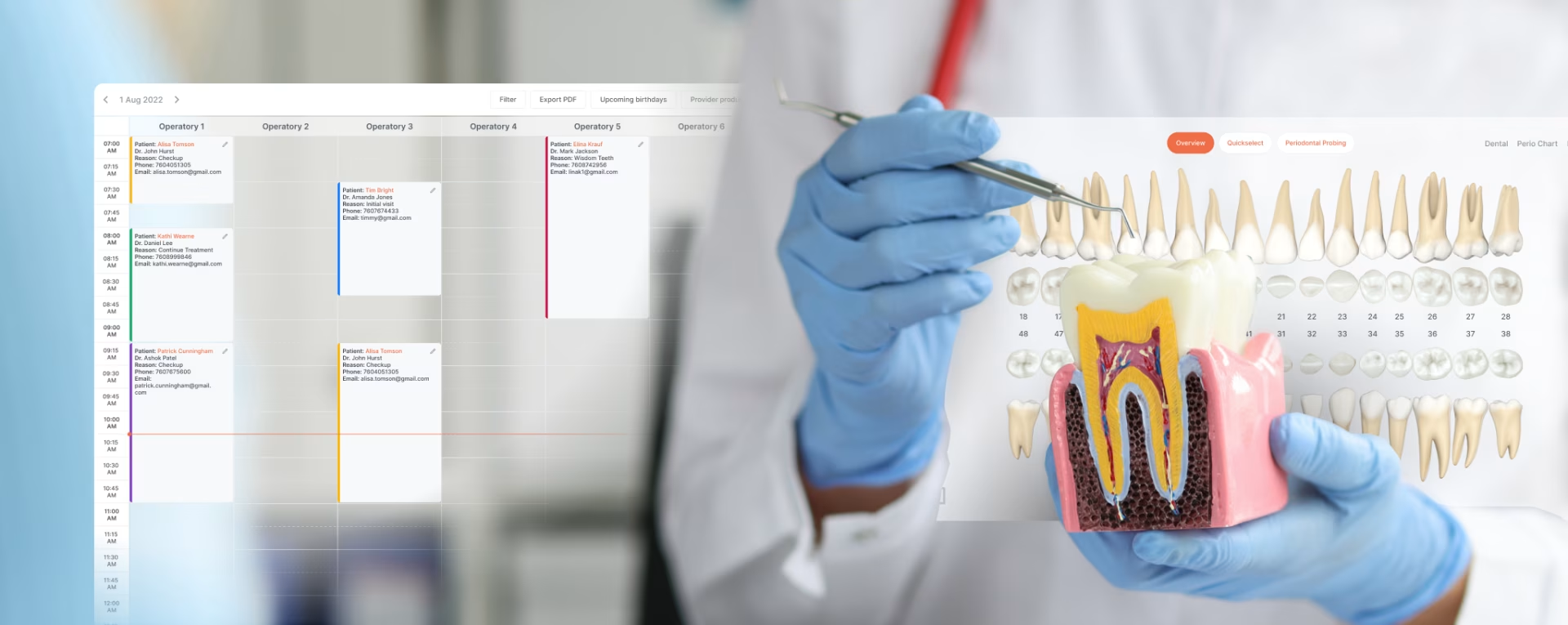
Healthcare interfaces interact with users at moments of high stress and high stakes. The margin for ambiguity is effectively zero. We have designed for radiology workflows, health monitoring platforms, dental practice management software, and public health data visualization for state agencies. The ClyHealth clinical AI interface surfaces one recommendation at a time with the system’s reasoning made visible, because clinicians making time-pressured decisions need to see the model’s logic, not choose from a menu. The design standard across the board is the same: a user should never have to wonder what to do next.

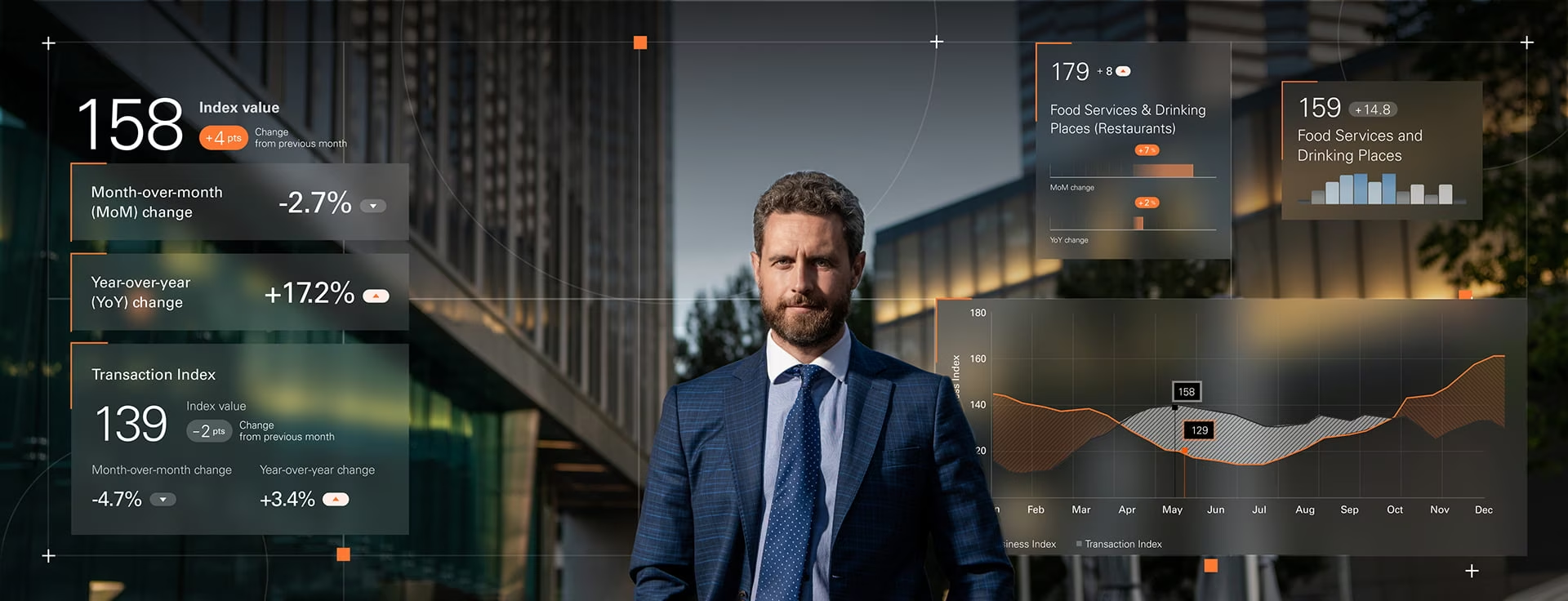
Financial products carry one of the highest costs of user error in any interface category. A confusing workflow in a banking dashboard is not an inconvenience; it is a liability. Our work for Fiserv on the Small Business Index required translating complex macroeconomic data into a tool that business owners with no financial analysis background could use accurately. That is the kind of design problem we are built for.

The design challenge in AI products is not making the interface look intelligent. It is making the model’s behavior legible to users who do not understand how it works. We have designed AI interfaces in which the output is a recommendation, a prediction, or a risk score, and the user must decide whether to trust it. Getting that trust calibration right in the interface is a specific design skill that most agencies lack. We have built it across enough AI products to have a methodology.

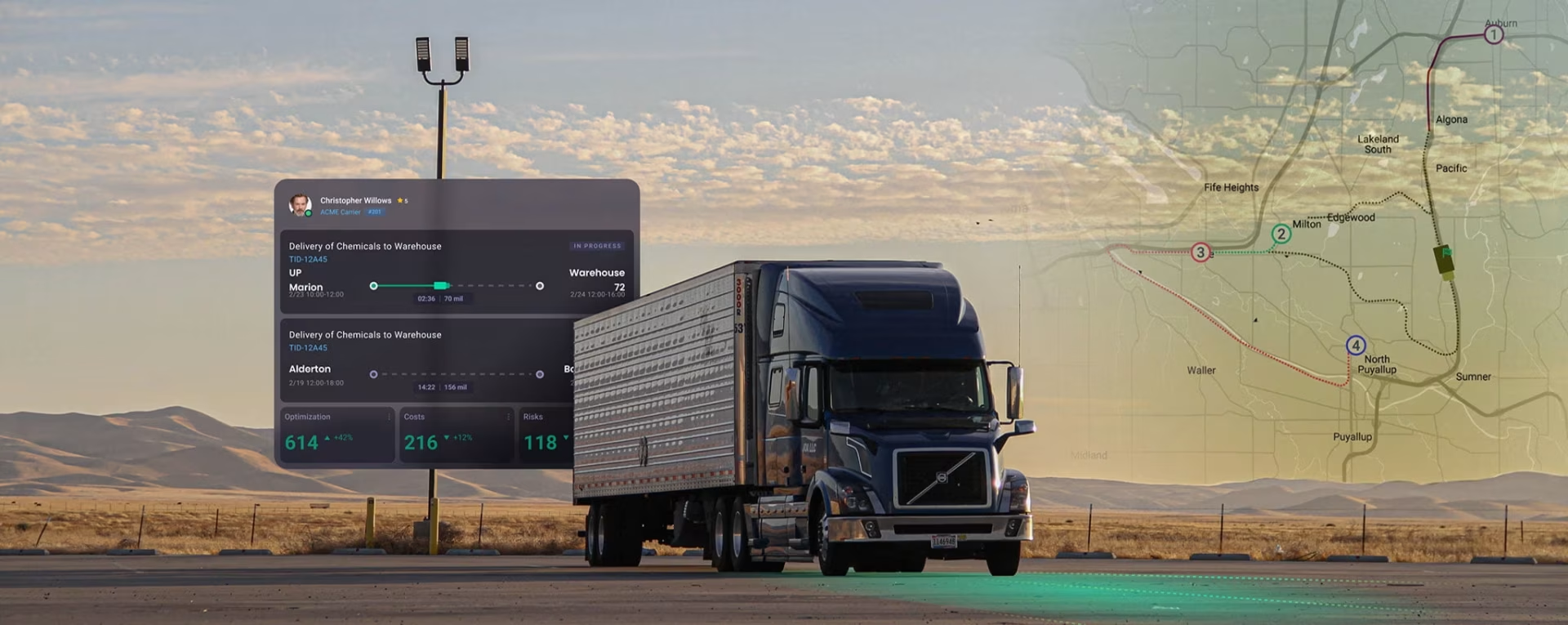
Transportation software layers GIS data, real-time telemetry, and complex operational workflows into products often used in high-distraction environments. The Uber driver-facing interface we designed had to surface route, earnings, and incident information within the brief glances a driver can safely make at the screen while operating a vehicle. Information hierarchy under that constraint is fundamentally different from information hierarchy in a desktop dashboard.

Travel products live or die on mobile. The user journey from search to booking happens on a phone screen, in a moving vehicle, often with a poor connection. We design travel products that complete the journey without friction, because any drop in the funnel is a booking that went elsewhere.
Contact Us
Fill out the form!
Frequently Asked
Questions
These are the questions buyers most often ask before engaging Fuselab as their digital product design agency. Each answer is written to be useful before any contact, not to gate information behind a sales call.
What is a digital product design agency?
A digital product design agency designs working software products end-to-end, owning user research, information architecture, interaction design, visual design, and engineering handoff as a single integrated engagement. The distinction from a UI design studio is scope: a UI design studio produces interface mockups against a fixed brief, while a digital product design agency takes responsibility for the product working when users hit it. Most engagements last 4 to 12 months from research through engineering handoff.
What does a digital product design service include?
A digital product design service includes discovery and user research, information architecture and user flow design, interaction design and prototyping, visual design and a design system, and engineering handoff documentation. The exact deliverables vary by engagement scope, but the standard package on an enterprise engagement includes a research report with personas, a design system in Figma with documented components, interactive prototypes for primary user flows, and annotated specifications the engineering team builds from.
How is digital product design different from UI/UX design?
Digital product design covers the full engagement from research through engineering handoff. UI/UX design is the design discipline itself: the methods, the artifacts, the design system. An agency offering UI/UX design may produce excellent interface mockups, while a digital product design agency takes responsibility for the strategic decisions about what to build, the research that validates those decisions, and the engineering handoff that gets the design implemented correctly.
How is digital product design different from product strategy consulting?
Digital product design produces shipped design artifacts that the engineering team builds from. Product strategy consulting produces recommendations, frameworks, and roadmaps that the client team then executes on. Most enterprise engagements need both, and the highest-leverage agencies do both within a single engagement rather than handing the strategy off and starting over with a separate design team.
How much does a digital product design engagement cost?
Digital product design engagements with US specialist agencies typically cost between $50,000 and $300,000 depending on scope. MVP design engagements run $50,000 to $120,000, full enterprise digital product engagements run $150,000 to $300,000, and regulated-industry engagements add 15 to 25 percent for compliance documentation. Hourly rates for US specialist agencies range from $100 to $250.
How do you choose a digital product design company?
The most useful test when comparing digital product design companies is asking each one for a named project in your industry or with a similar technical constraint, then reading the case study and contacting the named client. Agencies that describe their work generically without naming clients have either not done the work or do not have permission to discuss it, and either way the relationship will not produce strong references later. The second test is whether the agency can explain its handoff process in specific terms before the engagement starts.
How long does a digital product design project take?
A digital product design project takes 4 to 6 months for an MVP engagement and 8 to 12 months for a full enterprise SaaS engagement including design system and handoff documentation. Regulated industry engagements add 4 to 8 weeks for compliance review cycles. Timelines compress when an internal product team has already done discovery work the agency can validate, and they extend when integration with existing systems is discovered mid-engagement.
Digital Product
Design Blogs
Fuselab Creative is a design studio that focuses on creating meaningful and impactful experiences through design.